Amalia Puga: “Their craft inspired me to use design and innovation to help preserve this tradition and empower a group of women fighting for the future”.
Amalia Puga has gained international recognition for her design work that combines innovation, creativity, and sustainability.
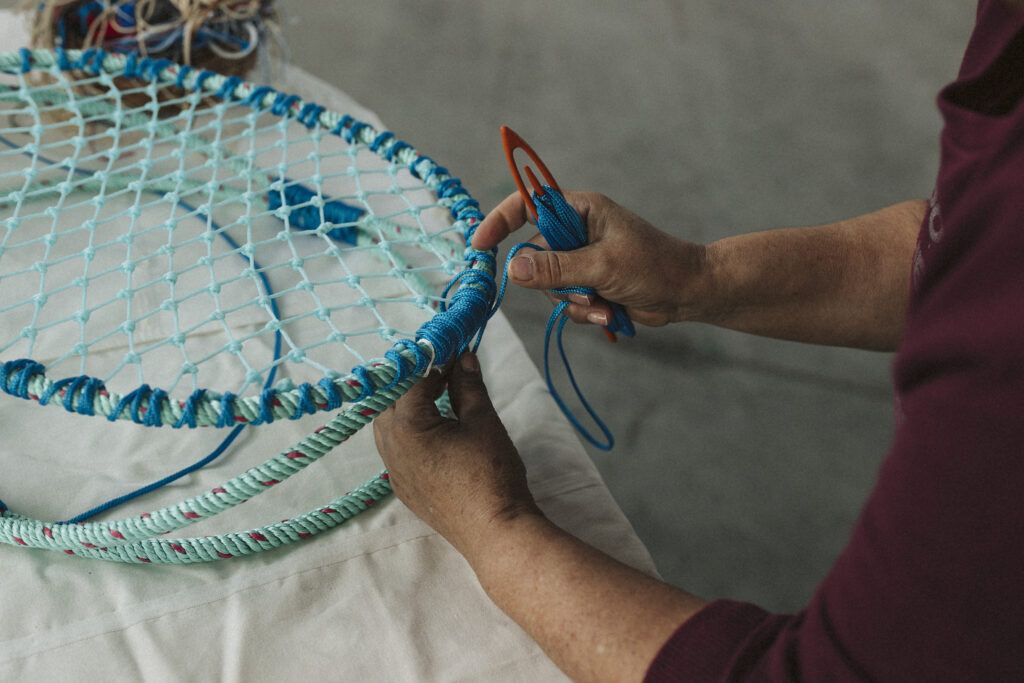
Amalia collaborates closely with a group of women whose traditional skills in repairing fishing nets are in danger of fading away. Through her ‘Entre Redes’ project, Amalia is bringing industrial design to a community that is at risk of disappearing.
1. How does a girl from a small coastal town uncover her love for design, and what fuels that passion?.
– Ever since I was little, I had a natural curiosity and a knack for crafting things with my hands. Over the years, I began to channel my ideas through various forms of art, including writing and photography. My fascination with human behavior and a desire to understand the world around me grew stronger, guiding me toward a path in design.
2. How would you describe your work, Amalia?.
– As I trained to become a designer, I realized that my projects aimed to evoke emotions and influence how people perceive and behave. I discovered that I viewed design as a narrative, a way to tell stories. I have always been drawn to traditions, craftsmanship, and local cultures. Through these elements, I enjoy creating projects that foster collaborative solutions among people, empowering and highlighting small communities with rich histories and cultures.
3. The “redeiras” are women who have been weaving and mending fishing nets. In some regions, particularly in northern Spain, only 375 of them remain, with 90% being women, as reported in 2023. How did this collaboration begin? What was the situation of these women when you first encountered them?
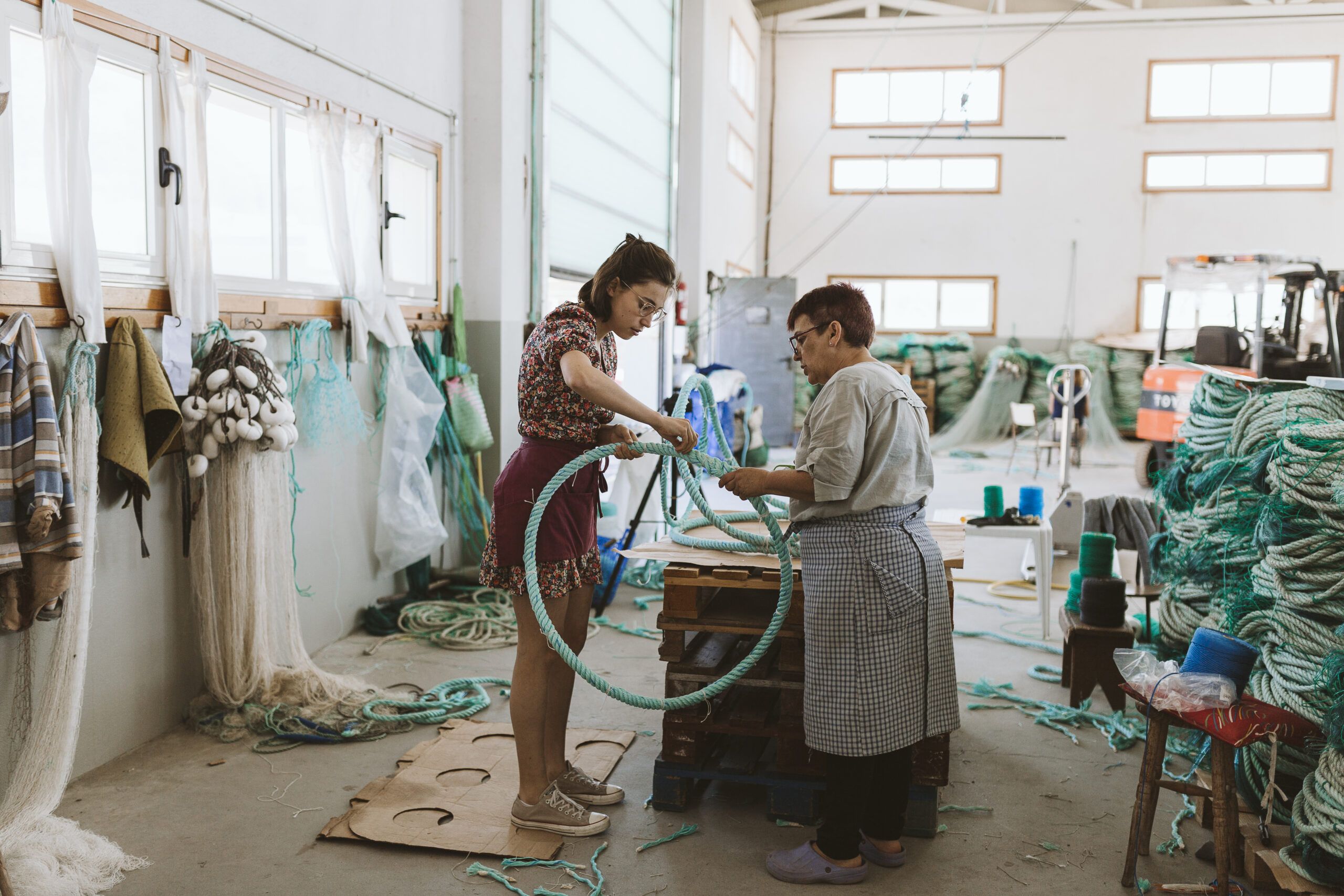
– I first connected with this women, the net makers of A Guarda, Spain, in 2015 while working on my final degree project. My interest in their craftsmanship inspired me to use design and innovation to help preserve this tradition and empower a group of women fighting for the future of their craft. When I met this women were facing a situation similar to what their profession is experiencing today, at risk of fading away due to a lack of generational succession. Over the years, through various design projects, they have been able to showcase and enhance their work, there by expanding and diversifying their craft.
4. How did they respond to your ideas, and what caught their attention the most?
– To immerse myself in this craft, I began by researching the evolution of the technique, speaking with fishermen, and spending several weeks living with this women who repair of fishing nets, listening to their stories and observing their work. One of the main challenges in developing projects was integrating into the group of redeiras and helping them visualize my ideas. Since they were used to working with fishing gear on a smaller scale, the concept of creating a larger structure from rope and steel seemed complex to them. Therefore, I proposed small experiments with their materials each day, gradually introducing them to the project. It was heartwarming to see more women becoming interested in participating and using their knowledge to contribute solutions.
5. How did they respond to your ideas, and what caught their attention the most?.
– To immerse myself in the world of this craft, I started by researching the evolution of the technique, talking to fishermen, and spending several weeks with the redeiras, listening to their stories and observing their work. One of the main challenges in developing projects was integrating into the group of “redeiras” and helping them visualize my concept. Since they were used to working with fishing gear on a smaller scale, the idea of creating a larger structure from rope and steel seemed quite complex to them. To bridge this gap, I proposed s mall experiments with their materials each day, gradually introducing them to the project. It was heartwarming to see more women becoming interested in participating and using their skills to contribute solutions.
6. What’s your usual timeframe for completing each piece you create?.
– Each piece is crafted in a very artisanal manner, so we usually work on orders and commissions, completing the pieces within a timeframe of 1 to 3 weeks, depending on the project.
7. After receiving the Gold Medal Adi 2020 from the Industrial Design Association for your project “Entre Redes,” what did this award mean to you, and how did it change your life?
– Winning the Adi Medal in 2020 brought significant attention to my project, and I began sharing my work through fairs and conferences both in Spain and abroad. This was incredibly exciting for me and fueled my passion for continuing to create and design.

8. Tell me about the “Bolina Project”. How would you define it and what do you hope to achieve?
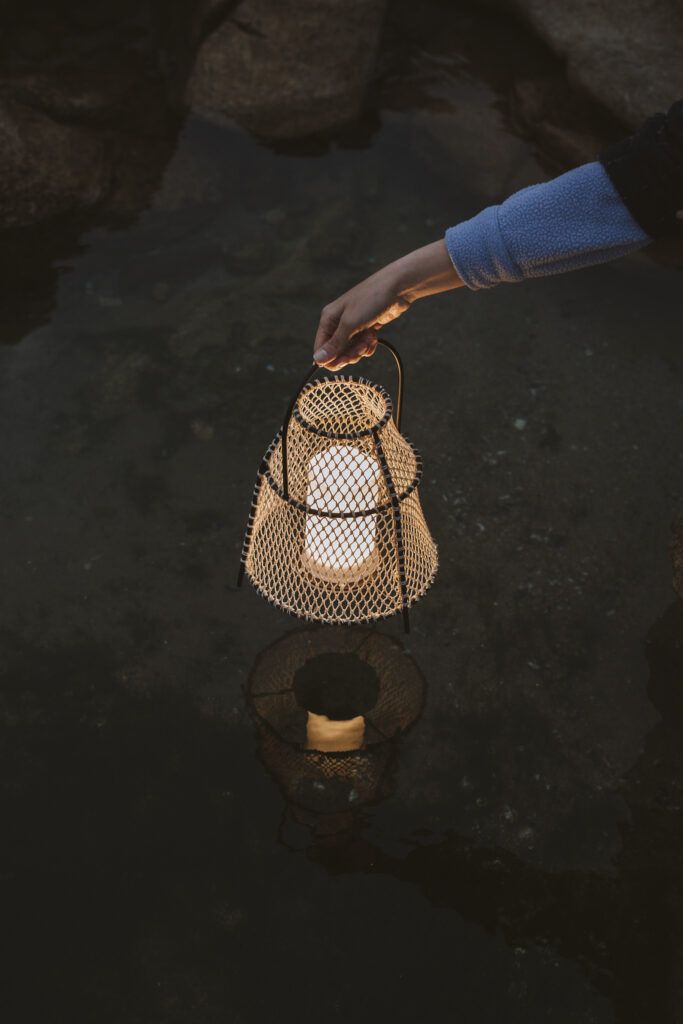
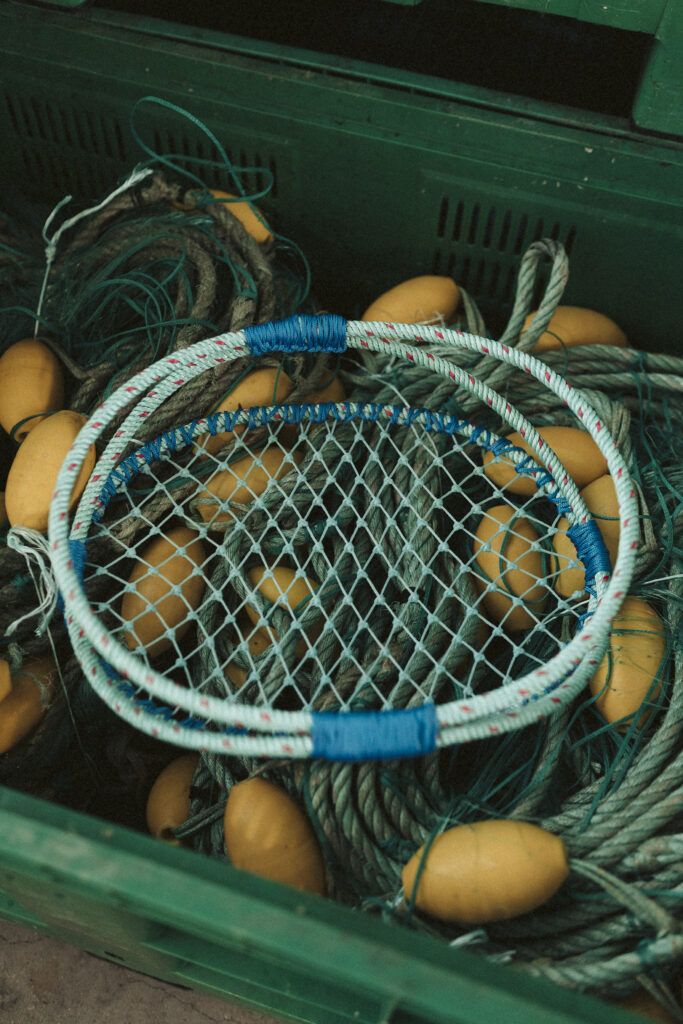
– The Bolina Project focuses on innovation outside major cities, using industrial design as a tool for social change. Through this initiative, we aim to create and market objects that blend craftsmanship with modernity, highlighting the maritime traditions of Galicia, Spain. Additionally, it breathes new life into marine materials, such as fishing gear, and engages at-risk communities, like the “redeiras,” by designing items that link the past with the future.

9. What are your thoughts on whether design can enhance and reshape traditional crafts, bringing back to life those handmade works that are on the verge of disappearing?.
– Coming from a small village rich in culture, I’ve learned the value of knowledge rooted in local communities. In today’s rapidly changing society, we have so many innovative solutions that we often let traditions fade away, viewing them as outdated. However, innovation isn’t solely about technology or looking forward; sometimes, it requires us to look back. I draw a lot of inspiration from past communities and the stories shared by my grandparents. During times of scarcity, they made the most of the resources around them and always found ways to repurpose materials. This is why I believe that innovation is not just about the future or the past, but rather a blend of both. Inspired by traditions, I aim to create projects that implement collaborative solutions to empower small communities with rich cultures and histories. I study and maximize the resources available to us, using innovative techniques to develop fresh projects that carry a strong emotional component.
10. Which pieces are you most proud of, and why?
– Right now, we are in a phase of creating many new pieces, but the one I feel the most proud of is the first one, the Bolina chair, which we made in 2015. This piece marked the beginning of everything for me, as it allowed me to connect with the women and helped me build confidence in myself and my mission to create and showcase Galician crafts.