Inside “Wonderland”
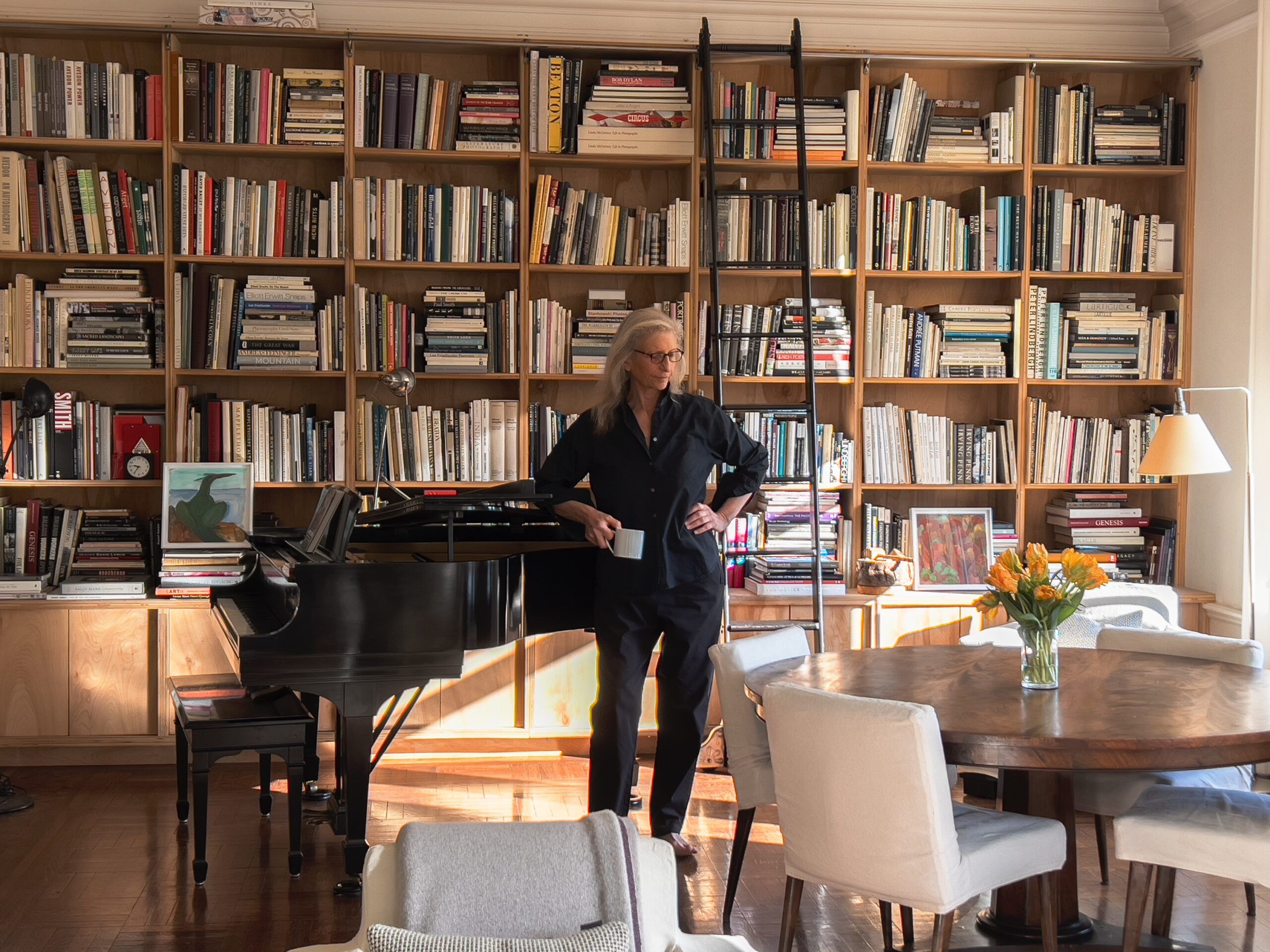
The exhibition dedicated to Annie Leibovitz and organized by the MOP Foundation invites us to delve into a visual universe, a reflection of contemporary culture over the last 55 years. In front of me are more than one hundred photographs, many of them never exhibited before, tracing the trajectory of one of the most influential photographers of our time.
Influenced by photographers such as Robert Frank, who inspired her to see photography as a way of telling stories, Annie Leibovitz developed a free and intuitive approach to photojournalism. She was also inspired by Henri Cartier-Bresson, who, like Annie, began by studying painting and seems to share with her a pictorial way of framing the image. Cartier-Bresson’s work was decisive for Annie, leading her to choose photography over painting. From this sensibility emerged some of the most iconic images in recent history, such as the famous portrait of John Lennon embracing Yoko Ono, taken just hours before the musician’s assassination.
Annie’s career began at a time when the world of photography was predominantly male. Her working style discreet and observant allowed her to blend into her surroundings and go almost unnoticed, and as a result she allowed her to capture close-up images, documenting the intimacy and access spaces that others would have avoided.
People who know Annie often describe her as an extraordinarily creative person and a great storyteller, and that she approaches each photograph with a special sensitivity. This perspective naturally informs how she views her work and her relationship with fashion.
WONDERLAND.
The exhibition spans more than five decades of her career, from her early work in the 1970s to her most recent projects. Divided into four sections, it allows visitors to follow the evolution of Leibovitz’s work, from her beginnings in photojournalism, to her later foray into fashion photography and her consolidation as one of the greatest photographers of our time.
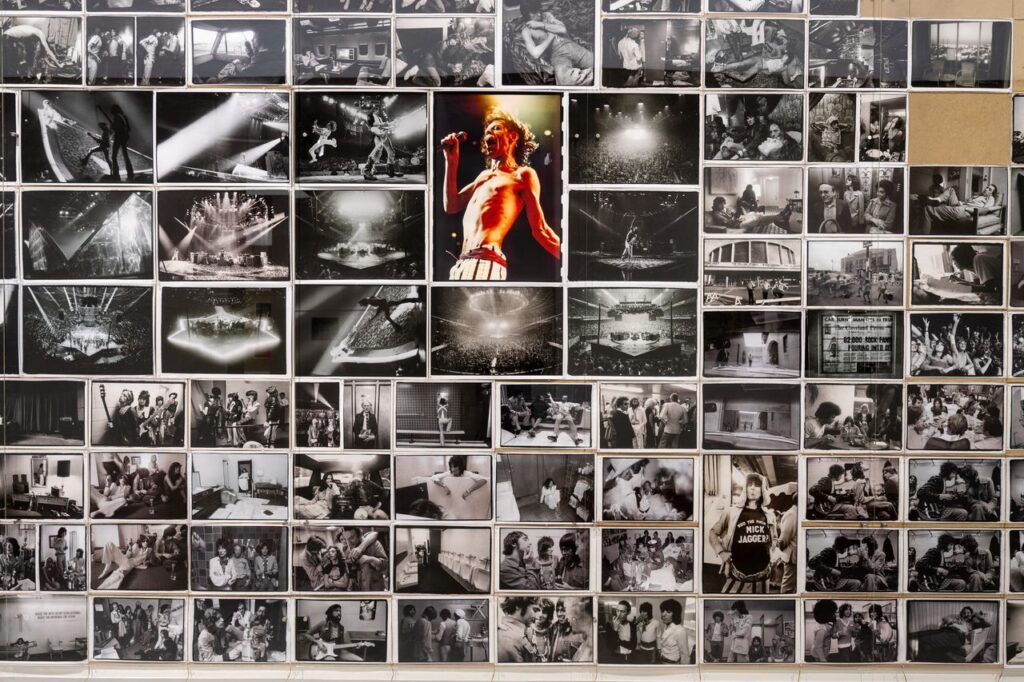
The journey begins with an immersive installation dedicated to the years she spent touring with The Rolling Stones. In these early works, Annie takes us on a visual journey back to the 1970s. The images capture spontaneous moments and reveal, through her close proximity, the intensity of life on the road and the privileged access the photographer had to the band’s world.
In “Early Years,” the section dedicated to her first steps as a photographer, her photographic gaze becomes clearly visible. Here it is possible to see how her style begins to take shape through portraits in which her ability to construct stories through a single image already emerges.
The third section, “Stream of Consciousness,” introduces me to her creative process. It focuses on more intimate portraits and early works that already reveal a strong sensitivity toward contemporary culture.
The exhibition culminates with “Wonderland,” the main section that gives the show its name. Here more than one hundred images are brought together, many of them little known, alongside video installations centered on her fashion and style work for iconic magazines such as Vogue and Vanity Fair. As I move through the exhibition, the full scope of Leibovitz’s work becomes increasingly clear.
Annie, has often said she doesn’t see herself as a traditional fashion photographer, even though she has done extensive fashion work, her work for Vogue and Vanity Fair redefined contemporary editorial photography. In 1983 she left the publication where she had developed much of her early career to join the launch of Vanity Fair, where she still contributes today. Since 1998 she has also collaborated regularly with Vogue.
Her understanding of fashion is profound. Rather than focusing solely on clothing or aesthetics, Annie is ultimately trying to capture the person, their presence, their identity, and their place within a broader cultural narrative. Over time, her photography became more sophisticated, while never losing the closeness that characterizes her portraits. Her style is recognized for its cinematic aesthetic, with large scale sets, carefully designed lighting, and styling that plays an essential role in constructing almost theatrical atmospheres and imaginary worlds.