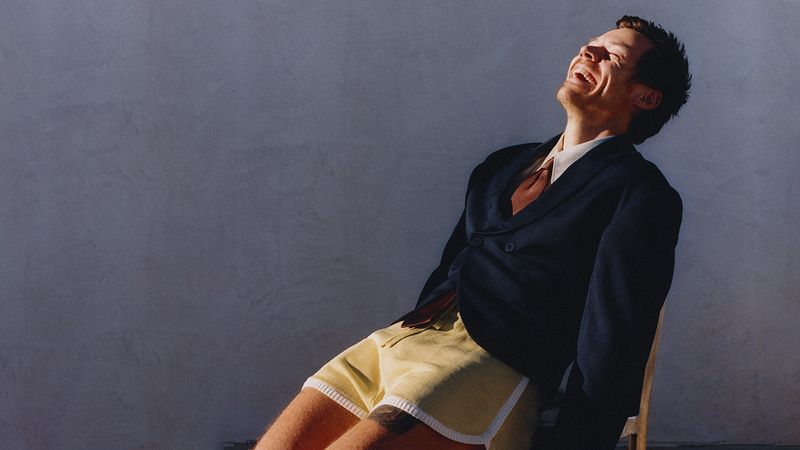
Meltdown Festival 2026 marks a defining moment in contemporary music culture as the festival returns under the curation of Harry Styles, transforming the Southbank Centre into a dynamic space of artistic exchange.
In this exclusive interview with Jane Beese, we explore how Styles has shaped one of the world’s longest-running artist-curated festivals, bringing together a diverse and unexpected mix of musicians, genres, and cultural influences.
• What has Harry Styles brought to the Meltdown Festival as a curator that might surprise people?
– The breadth of the line-up that Harry has assembled has certainly surprised a few people! He’s united a really eclectic mix of brilliant musicians, and the array of artists that he’s bringing into the fold speaks to his own interests and influences. He’s brought together legends who have paved the way for generations, alongside new acts who have inspired him to push his own creative boundaries.
• How involved has he been in shaping the lineup and overall creative direction?
– The curator has full control over the process, so Harry really has been integral in shaping the lineup and defining the creative direction for this year’s Meltdown. Everything you see across the site over those two weeks, he has shaped. It’s all a reflection of his interests and his deep love of music.
• Were there any particular themes, artists, or ideas he felt especially strongly about including?
– Beyond the curator’s interests, there tends not to be a theme for Meltdown in the traditional sense. That said, one of the reasons we chose to work with Harry this year is the fact that our values align so closely – particularly a fascination with interdisciplinary creativity and an appreciation of the power of music to bring people together. So I guess you could say that, if there were to be a theme this year, it would be “we belong together” – celebrating the power of music and culture to forge and strengthen community. It’s a core value of the Southbank Centre, and very close to Harry’s heart as well.
• Could you walk us through how the lineup was curated?
– As with all Meltown curators, Harry has curated a lineup that represents a creative cross-section of his interests. The breadth of the programme reflects his deep curiosity about music and his wide-ranging passions, moving fluidly between art-forms, genres, generations, and scenes. This lineup moves from jazz classics to the club and back again, with detours into folk and indie scenes (and much more) along the way. The actual process of curation varies from artist to artist. Every curator brings their own networks, their own interests, musical or otherwise, and their own communities. Our role is to work closely with them to realise their vision across our spaces here. It’s a long, collaborative process and watching the festival slowly take shape through their perspective is incredibly rewarding.
• How does this edition reflect both Meltdown’s legacy and where it’s heading?
– This is a big year for the Southbank Centre we’re celebrating 75 years since the building of the Royal Festival Hall and the first chapter in the Southbank Centre story. The Southbank Centre is the UK’s largest multi-arts centre, and we believe strongly in the power of culture to bring people together. That belief hasn’t changed in the 75 years since the Festival of Britain united the nation, and now it’s a driving force behind Harry Styles’ Meltdown.
For Meltdown, but also more broadly across our 75th year, we’re championing young people, curiosity, creative freedom and experimentation. These are values that sit very naturally within the festival, and you’ll see a continued emphasis on participatory and free public programming, and on cross-arts collaboration across the site. 40% of what we do at the Southbank Centre is free and there will be a range of free events across the Meltdown programme too. It’s a moment to celebrate our history, certainly, but also to look forward to ask what the next 75 years of cultural exchange might look like and how we can be the arts centre of the future.
The Curation Process
• What are some of the biggest challenges in curating a festival of this scale?
– All festivals have their challenges: funding is tight and logistics, particularly as we work across the whole of the Southbank Centre’s 11 acre site, can be tricky. But I think the secret to Meltdown’s success, and what’s kept it feeling fresh for over thirty years and counting, comes down to a combination of having a clear purpose and a flexible offer. The purpose has remained consistent across more than thirty years, offering artists genuine creative control and offering audiences genuine access to an incredible lineup of performances. But, the format and the shape of the festival changes year on year. The whole energy of the Festival is renewed annually through a different creative lens. And, because it sits within the Southbank Centre and the fabric of our programme, our resident orchestras, our communities and our free public spaces, it’s rooted in something so much bigger than the sum of its parts.
• How do you balance a curator’s personal vision with the broader mission of the Southbank Centre?
– With Harry, we haven’t had to. Our interests and values align really closely, and that’s a big part of the reason we approached him to be curator. We always start our work around Meltdown thinking about who’s culturally current right now, who’s interesting, who’s aligned with the Southbank Centre’s values. There’s no one more culturally current than Harry Styles this year, and, luckily for us, there’s also no one whose values align more closely with the Southbank Centre’s vision. Harry was someone we felt embodied both artistic ambition and a belief in music as a connective force: we belong together, after all.
Cultural Impact & Audience
• Meltdown has a strong legacy. How do you see its role in shaping London’s cultural landscape today? –
– Meltdown is the world’s longest-running artist-curated Festival, this year marks the 31st edition and each year has been totally different: shaped by its curator and reflecting their personalities and interests in new and exciting ways. These developments and changes are really the whole point of the Festival, they’re absolutely at the heart of what we want to do with it and why it still feels fresh year-on-year. In a way, that dynamic and ever-shifting process is exactly why it aligns so closely with London’s cultural landscape, because that’s ever-evolving as well. At the Southbank Centre, we want to reflect and represent the creative pulse of the city as it changes around us, and Meltdown is a big part of this ambition.

• What kind of conversations or cultural moments do you hope this year’s festival sparks?
– There’s no set message or moment that we cultivate with Meltdown, but two things that have risen to the fore with Harry’s curation are artistic breadth the line-up is very wide-reaching, with a real mix of artists set to play, plus a cross-arts programme that’s still in the works – and the lyric “we belong together.” What we’re hoping to achieve this summer is an opportunity to come together and celebrate, and to be a part of what’s happening at the Southbank Centre – and come back every night, because every single day will be different!
• Were there any unexpected moments or turning points during the planning process?
– Every Meltdown is different, so it’s always totally unexpected – that’s part of the joy. We offer artists genuine creative freedom, so it’s never a formulaic process. There are always hiccups and twists in the road, that’s unavoidable with a festival of this scale, but we’ve had a fantastic experience working with Harry to bring his vision into reality. It’s clear that, as a curator, Harry totally understands what Meltdown represents – it’s not just a gig headlining a festival, it’s shaping the creative identity across the whole site.
• Is there anything audiences should know before coming in?
– I often say that Meltdown is essentially an opportunity to peek into the record collection of the curator, and to find out what they love and what they’re interested in. People will arrive at the Southbank Centre to see one artist they love, and then find themselves discovering so much more: there will be performances, events, DJ sets, and so much more across our site throughout the two weeks of the festival. It’s also an opportunity to catch performances from household names and icons. Beyond the starry roster of curators, not many people know that previous lineups have featured Nina Simone, a reunion of the New York Dolls, and Jeff Buckley’s final performance in the UK. Every summer, the new curator creates incredible and unforgettable moments across our Southbank Centre stages. Something unique and special unfolds across the site, many of which will never be repeated. And, perhaps most importantly: there will be lots of free activity on site during the festival, so even if you don’t have a ticket, come down to the Southbank Centre and see what’s happening.
Photo: laurajanecoulson
Jane Beese, (Head of Contemporary Music at the Southbank Centre).